


A brass dinner set is a traditional Indian tableware collection made from an alloy of copper and zinc, valued for its durability, antimicrobial properties, warm golden finish, and deep roots in Ayurvedic and cultural dining traditions. Brass dinnerware is safe for everyday use, easy to maintain, and considered auspicious for festive and daily meals alike, which is why it remains one of the most trusted metals for Indian kitchens even today.
Why Brass Has Stayed at the Heart of the Indian Kitchen
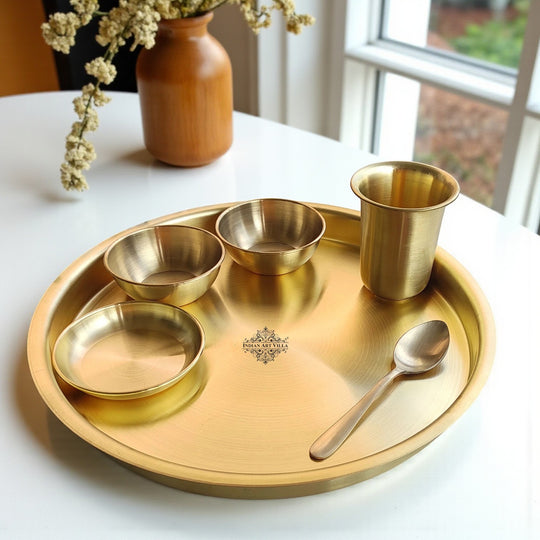
Long before steel and ceramic took over modern kitchens, brass, kansa, and copper were the metals of choice across Indian households. Brass, known as 'pital' in Hindi, is an alloy of copper and zinc that combines the antimicrobial strength of copper with added hardness and shine. It has been used for generations to craft thalis, bowls, glasses, and serving pieces that were passed down as family heirlooms.
This tradition is kept alive today by the thatheras, a community of master metal artisans,whose hand-hammering craft has even been recognised by UNESCO as part of India's Intangible Cultural Heritage. Every brass dinner set carries a piece of that centuries-old skill, making it as much a cultural artefact as a functional piece of tableware.
Making a single brass thali or bowl can involve several stages of casting, hammering, shaping, and polishing, often carried out by hand using techniques that have barely changed over generations. This is part of why genuine brass dinnerware feels different from mass-produced alternatives: each piece carries subtle marks of the hands that shaped it, and the weight and finish reflect real craftsmanship rather than assembly-line production.
Benefits of Brass Dinner Sets
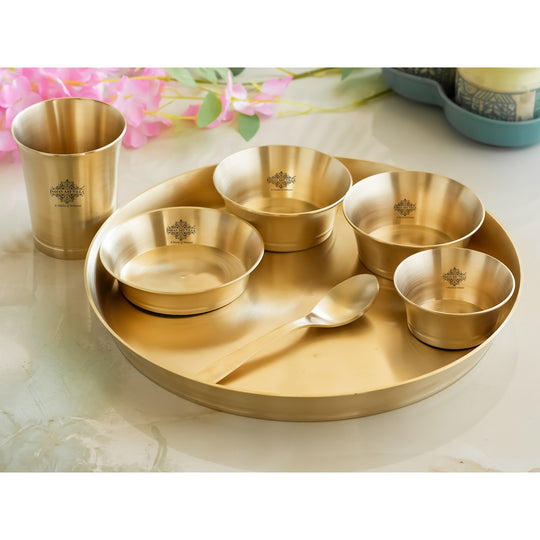
Choosing a brass dinner set brings together tradition, wellness, and everyday practicality. Here is what makes it worth considering for your home:
• Naturally antimicrobial: Like copper, brass has oligodynamic properties that help inhibit the growth of certain bacteria on its surface, supporting better hygiene at the table.
• Rich in trace minerals: Food and water served in well-maintained brass utensils can pick up small amounts of beneficial trace minerals, a practice long recommended in Ayurveda under the concept of Tamra-Kansa dining.
• Excellent heat retention: Brass holds warmth well, so meals served in a brass thali or bowl stay pleasantly warm for longer.
• Durability that lasts generations: A well-cared-for brass dinner set can easily last decades, often becoming a treasured family heirloom.
• Elegant, festive appeal: The warm golden tone of brass adds a traditional, celebratory look to everyday meals, festive thalis, and gifting occasions.
• Supports traditional craftsmanship: Every purchase helps sustain the livelihoods of thathera artisan families continuing an age-old handcraft.
Is Brass Food Safe? What You Should Know
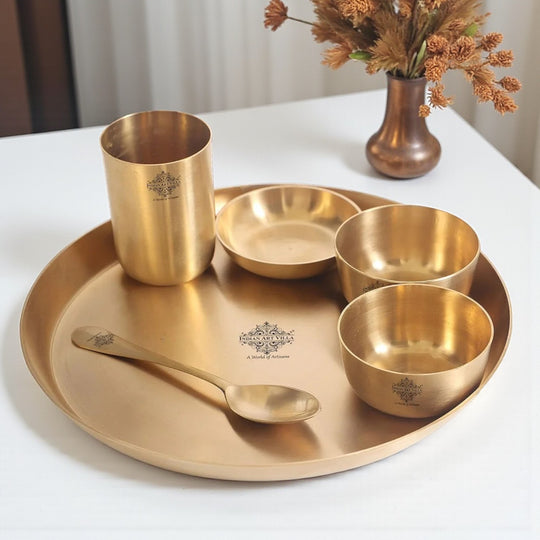
Yes, brass is considered food safe for regular use when properly maintained. Reputed manufacturers craft brass dinnerware following food-safe practices, and many pieces are given a protective tin (kalai) lining for direct contact with acidic foods, similar to the traditional practice used with copper and kansa vessels. As with any metal dinnerware, keeping pieces clean, dry, and well-maintained ensures they remain safe and long-lasting for daily use.
This is also why brass, kansa, and copper have coexisted in Indian kitchens for centuries — each metal was traditionally chosen for a specific purpose, whether it was serving rice and dal in kansa, drinking water from copper, or using brass thalis and serving pieces for daily and festive meals.
Brass vs. Kansa: Which One Should You Choose?
Both brass (pital) and kansa (bronze, an alloy of copper and tin) hold an important place in Indian dining traditions, and the choice between them often comes down to purpose and personal preference rather than one being superior to the other.
Kansa is especially prized in Ayurveda for serving rice, dal, and curries, as it is believed to help balance three doshas and is valued for its unique ability to interact beneficially with certain foods. Brass, on the other hand, is prized for its versatility, strength, and lustrous finish, making it a wonderful everyday choice for thalis, bowls, glasses, and serving sets that see frequent use. Many households happily use both — kansa for specific Ayurvedic dining rituals and brass for daily, durable, beautifully finished tableware. Bronze pieces, close cousins of kansa, add further variety for those who enjoy rotating metals across occasions.
Brass vs. Copper Dinner Sets: A Complementary Pair
Copper and brass are often compared, but they truly work best together in a traditional Indian kitchen. Copper is celebrated for drinkware, especially water bottles and jugs, because of its well-documented Tamra Jal tradition and strong antimicrobial reputation. Brass, being sturdier and easier to shape into larger serving pieces, is ideal for dinner sets, thalis, and bowls that are used for full meals.
Rather than choosing one over the other, many households build a complete traditional dining experience by pairing a brass dinner set for meals with copper vessels for drinking water — each metal contributing its own strengths to a wholesome, tradition-rooted table setting.
Which Metal Is Best for a Dinner Set?
There is no single 'best' metal — brass, kansa, copper, bronze, and stainless steel each bring their own strengths to the table. Brass offers a beautiful balance of durability, affordability, antimicrobial benefit, and festive shine, making it one of the most popular choices for a complete dinner set. Kansa and bronze are excellent for those seeking a deeper Ayurvedic dining ritual, copper remains unmatched for drinkware, and stainless steel offers everyday convenience for busy households. The right choice ultimately depends on your routine, your dining traditions, and how you would like your table to look and feel.
Choosing the Right Brass Dinner Set for Your Family
Brass dinner sets are typically available in several sizes to match different household needs and occasions:
• Brass Dinner Set for 4: A compact, practical choice for small families or couples, usually including plates, bowls, and glasses for four.
• Brass Dinner Set for 6: A popular mid-size option that comfortably serves a family of six, ideal for regular family meals and small gatherings.
• Brass Dinner Set 51 Pieces: A generously sized set that typically includes thalis, bowls, glasses, and serving pieces, well-suited for larger families and festive entertaining.
• Brass Dinner Set 57 Pieces & 63 Pieces: These larger, elaborate sets are designed for big family homes or those who host frequently, offering a complete range of serving bowls, spoons, and platters alongside individual dining pieces.
When choosing between these, consider your family size, how often you host guests, and whether you want a set purely for daily use or one that can also double up for festive and celebratory dining.
Antique Brass Dinner Sets: Timeless Craftsmanship
For those who love a vintage, heirloom aesthetic, antique brass dinner sets bring a distinctive old-world charm to the table. Featuring hand-engraved motifs, oxidised finishes, and traditional Rajasthani and Moradabad design patterns, these pieces are crafted by skilled thathera artisans using techniques passed down through generations. An antique-finish brass dinner set makes a striking centrepiece for festive meals, pujas, and special family occasions, while also serving as a thoughtful gifting choice for weddings and housewarmings.
Caring for Your Brass Dinner Set
A little regular care keeps brass dinnerware looking radiant for years:
• Wash with a mild cleanser and warm water; avoid harsh detergents that can dull the shine.
• Dry thoroughly after washing to prevent water spots and tarnishing.
• Use natural cleaners like tamarind, lemon, or a mix of salt and vinegar occasionally to restore shine.
• Store in a dry place, and use pieces regularly — brass tends to develop a beautiful patina and stays brighter with consistent use.
Brass Dinner Sets as Gifts
Brass dinnerware has long been considered an auspicious gift in Indian culture, often exchanged during weddings, housewarmings, festivals, and milestone celebrations. Its association with prosperity and well-laid tables makes a brass dinner set a thoughtful choice when you want a gift that is both meaningful and practical. A well-packaged set, whether a compact option for a newly married couple or a generous 51-piece collection for a joint family, tends to be treasured and used for years rather than tucked away, which is what makes it such a satisfying gift to both give and receive.
Engraved or antique-finish brass pieces make especially memorable corporate and festive return gifts, as they carry a sense of craftsmanship and tradition that mass-produced gift items simply cannot match.
Brass Dinner Sets Across Indian Homes
From Jaipur's royal kitchens to Moradabad's export workshops, brass dinner sets have travelled across regions while keeping their essential character intact. In many parts of India, a brass thali set is still brought out for weddings, poojas, and Sankranti or Diwali feasts, while daily-use pieces quietly do their job in the kitchen year-round. This dual role, festive and functional, is part of what has kept demand for brass dinner sets steady across generations, even as newer materials have entered the market.
Today, brass dinner sets made in India are also finding their way into homes abroad, as more people look to bring authentic, handcrafted tableware into their kitchens rather than relying only on mass-manufactured alternatives. Whichever size or finish you choose, a genuine, well-made brass dinner set connects your table to a craft tradition that has been refined over centuries.
Bringing Brass Home
A brass dinner set is more than tableware — it is a connection to India's rich culinary and craft heritage, brought to life on your everyday table. Whether you choose a set for 4, a generous 51-piece collection, or a striking antique-finish design, brass adds warmth, tradition, and lasting durability to your dining experience. And when paired with copper drinkware, kansa serving bowls, or bronze accents, it becomes part of a beautifully rounded, tradition-inspired kitchen that celebrates the best of every metal.
Frequently Asked Questions
Is it good to eat on brass plates?
Yes, eating on brass plates is considered good and safe. Brass has natural antimicrobial properties that support hygiene, and it is a traditional Indian practice believed to add beneficial trace minerals to food when the plates are well-maintained and used regularly.
Which is better, pital or kansa?
Neither is strictly 'better' — they serve different purposes. Pital (brass) is durable, versatile, and ideal for everyday thalis, bowls, and serving pieces, while kansa (bronze) is especially valued in Ayurveda for serving rice, dal, and curries. Many households use both together as part of a balanced, traditional dining setup.
What are the benefits of brass dinner sets?
Brass dinner sets offer natural antimicrobial properties, added trace minerals, excellent heat retention, long-lasting durability, and an elegant festive look. They also support traditional thathera craftsmanship and make meaningful heirloom pieces for the home.
Which metal is good for dinner sets?
Brass, kansa, copper, bronze, and stainless steel are all good choices for dinner sets, each with its own strengths. Brass is especially popular for its durability, shine, and affordability, making it a versatile, well-rounded choice for daily and festive dining.
Which dinner set is best, copper or brass?
Both work wonderfully together rather than competing. Copper is best known for drinkware, thanks to its Tamra Jal tradition, while brass is sturdier and better suited for full dinner sets, thalis, and bowls. Many families use copper for water and brass for meals to enjoy the benefits of both.
Is brass food safe?
Yes, brass is food safe when properly maintained. Well-crafted brass dinnerware, sometimes finished with a traditional tin lining for acidic foods, has been safely used in Indian kitchens for generations and remains a trusted, hygienic choice for daily and festive dining today.

