


A copper matka is the better everyday choice if your priority is health benefits and durability, while a clay matka wins if your only goal is maximum cooling during peak summer. Copper matka water benefits from the oligodynamic effect, an antimicrobial property backed by traditional Ayurvedic practice and studied in modern research, while clay matkas simply cool water through evaporation without changing its mineral or antimicrobial properties. Below, we break down exactly how these two traditional water storage vessels compare, so you can decide which one belongs on your kitchen counter.
What Is a Copper Matka?
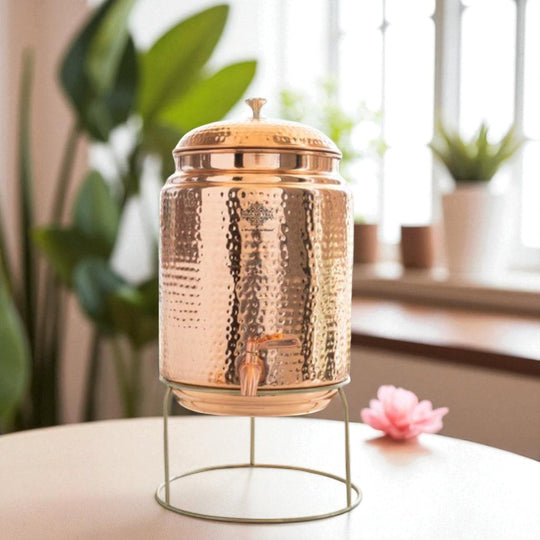
A copper matka is a round-bellied water storage pot made entirely of pure copper, usually hand-hammered by traditional artisans known as thatheras. Unlike a copper bottle, which is designed for portability, a copper matka is built to store larger volumes of water at home, typically between 3 and 10 litres, making it ideal for families who want to prepare Tamra Jal, the Ayurvedic practice of storing water in copper overnight before drinking it the next morning.
The thathera craft of hand-beating copper and brass sheets into vessels is recognised by UNESCO as an Intangible Cultural Heritage, and it is still practised in artisan clusters in Jaipur and Moradabad today. When you buy a copper matka from a manufacturer that works directly with these artisans, you're getting a piece of that living heritage, not just a container.
What Is a Clay Matka?
A clay matka is a traditional earthen pot, typically made from natural clay that is shaped on a potter's wheel and fired at low temperatures. Its defining feature is porosity: the tiny pores in the clay allow a small amount of water to seep through the walls and evaporate, which pulls heat away from the water inside and keeps it several degrees cooler than room temperature. This is why clay matkas have been the go-to summer water vessel across Indian households for generations.
Clay matkas don't add minerals or antimicrobial properties to the water in any meaningful, measurable way. Their entire value proposition is temperature control and the distinctive earthy taste that many people grew up drinking.
Copper Matka vs Clay Matka: Which Is Better?
If you search 'copper matka vs clay matka which is better', the honest answer depends on what you're optimising for. For health-focused water storage, a copper matka is the stronger pick because of the oligodynamic effect, copper's natural ability to inhibit the growth of certain bacteria and microorganisms on contact. This is the same principle Ayurveda has relied on for centuries when recommending water be stored in copper vessels overnight.
For pure cooling performance, especially in peak summer heat, a clay matka has the edge, since its evaporative cooling can bring water temperature down more noticeably than copper's mild thermal effect. Many households in North India historically kept both: a clay matka for daytime cooling and a copper matka specifically for the water they drank first thing in the morning.
Copper Matka vs Clay Matka vs Plain Water Storage
When you compare copper matka vs clay matka vs plain water stored in an ordinary plastic or glass container, the difference becomes clearer. Water stored in a plastic container undergoes no beneficial change at all, and depending on the plastic grade, it can leach compounds over time, especially if left in the sun. Water stored in a clay matka stays cooler and picks up a mild earthy taste, but its mineral and antimicrobial profile is essentially unchanged from tap water. Water stored in a copper matka, particularly for 6 to 8 hours or overnight, is the only one of the three where the vessel itself is actively interacting with the water through the oligodynamic effect, which is the core reason Tamra Jal has remained part of Ayurvedic daily routines for so long.
In short: plain containers are neutral, clay is about temperature, and copper is about a documented interaction between the metal and the water itself.
Health Benefits of Copper Matka Water
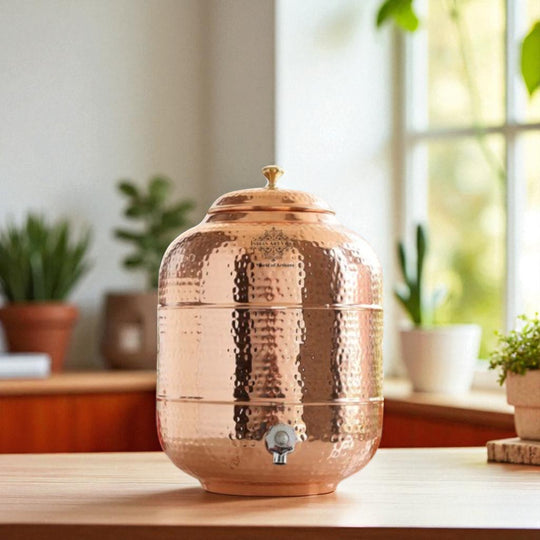
Copper matka health benefits are rooted in both Ayurvedic tradition and the oligodynamic effect of copper ions. Water stored overnight in a copper vessel is believed to support digestion, help balance the body's doshas according to Ayurveda, and provide trace amounts of copper, a mineral the body needs in small quantities for iron absorption and connective tissue health. The World Health Organization has also acknowledged copper's antimicrobial surface properties, which is part of why copper touchpoints are used in some hospital settings.
● Supports natural water purification through the oligodynamic effect
● Traditionally associated with better digestion when water is consumed as Tamra Jal
● Provides trace copper, a mineral involved in iron metabolism
● Vessel itself is naturally antimicrobial, unlike plastic or unfinished clay
● No plastic leaching risk, since copper is a fully inert, food-safe metal
Copper Matka vs Clay Matka: A Side-by-Side Comparison
|
Feature |
Copper Matka |
Clay Matka |
|
Core Benefit |
Oligodynamic effect helps naturally purify stored water |
Natural cooling through evaporative porous walls |
|
Taste |
Slightly metallic, sweetens with time (Tamra Jal) |
Earthy, refreshing 'mitti' taste |
|
Cooling Effect |
Mild, retains near room temperature |
Strong, water stays noticeably cooler |
|
Maintenance |
Occasional cleaning with lemon/tamarind |
Needs seasoning before first use; can develop algae if unwashed |
|
Durability |
Lasts decades, doesn't crack |
Fragile, prone to cracking or chipping |
|
Hygiene |
Naturally antimicrobial surface |
Porous surface can trap bacteria if not cleaned regularly |
|
Best Season |
Works year-round |
Best suited to summer months |
Which Type of Matka Is Best for Your Home?
The best matka for your home depends on your household's daily routine. If your main goal is a health-focused morning ritual, a copper matka sized for your family, usually 3 to 5 litres for a couple and 6 to 10 litres for a larger household, is the better long-term investment, since it lasts for decades and never needs replacing. If your priority is simply keeping drinking water cool through a hot Indian summer, a clay matka does that job well, though it will need more frequent cleaning and eventual replacement as it's fragile and can crack.
When choosing a copper matka specifically, look for three things: solid, food-grade pure copper rather than a copper-coated alternative, hand-hammered construction from artisans following the traditional thathera process, and a wide mouth that makes it easy to clean by hand. A well-made copper matka should feel evenly weighted, with no sharp seams or soldering along the inside surface that touches water.
Daily Copper Water Consumption: What You Need to Know
Drinking water stored in a copper vessel is considered safe for most healthy adults as part of a daily routine, and it's the basis of the traditional Ayurvedic Tamra Jal practice. The general guidance is to store water in the copper matka for at least 6 to 8 hours, commonly overnight, so the oligodynamic effect has time to work, and then to consume that water through the day rather than refilling and re-storing continuously without occasionally letting the vessel rest and dry.
For the general population, however, generations of Ayurvedic use combined with copper's recognised antimicrobial properties make it one of the simplest, most natural upgrades you can make to your everyday drinking water routine.
How to Clean and Maintain Your Copper Matka
● Rinse with plain water after every use; avoid dish soap, which can dull the copper's natural shine
● Once a week, scrub the inside with a paste of lemon juice and salt or tamarind pulp to remove tarnish naturally
● Dry the matka fully before refilling to prevent water spots
● Avoid storing anything acidic like fruit juice or buttermilk in a copper matka, since copper is meant specifically for plain drinking water
● A little surface darkening over time is normal and doesn't affect the vessel's function; it can be polished back to shine anytime
Why Craftsmanship Matters When Buying a Copper Matka
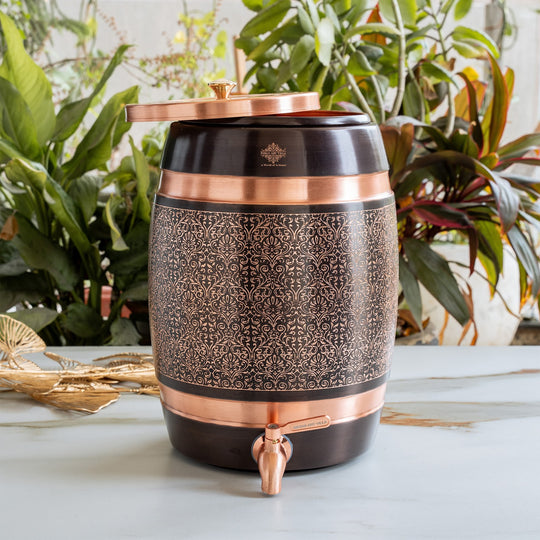
Not all copper matkas are made the same way, and the manufacturing process directly affects both the vessel's safety and how long it lasts. Hand-hammered copper matkas made through the traditional thathera process are shaped from a single sheet of copper that is repeatedly beaten into form, which compresses the metal's grain structure and makes the finished vessel more resistant to dents and leaks compared to thinner, machine-pressed alternatives. This is also the same UNESCO-recognised craft tradition behind many brass and copper kitchenware pieces found across Rajasthan and Uttar Pradesh.
When you're comparing options online, it helps to check whether the seller works directly with artisan clusters or simply resells mass-produced stock. A manufacturer-direct copper matka is generally more consistent in thickness, free of low-grade alloy fillers, and finished with food-safe methods rather than lacquer coatings that can wear off and expose the water to whatever's underneath. Reading a few verified customer reviews about longevity, not just initial appearance, is one of the simplest ways to judge whether a copper matka is built to last.
The Bottom Line
Both copper matkas and clay matkas have earned their place in Indian households for good reason. A clay matka is a simple, effective way to cool water naturally, especially in peak summer, without any added cost beyond the pot itself. A copper matka, on the other hand, offers something a clay pot simply can't: an active, centuries-old health tradition backed by the oligodynamic effect, paired with a vessel that, if hand-hammered by skilled thathera artisans, will outlast a clay matka many times over and never needs replacing due to cracking or breakage.
If you're building a daily wellness routine around your drinking water and want a vessel that pays for itself over decades of use, a genuine, hand-hammered copper matka is the stronger long-term choice for most households.
Frequently Asked Questions
Which type of matka is best?
The best matka depends on your goal. For daily health benefits and long-term durability, a hand-hammered, food-grade copper matka is best, since it supports the oligodynamic effect and lasts for decades. For pure summer cooling on a smaller budget, a clay matka is a good traditional option, though it's more fragile and needs more frequent care.
Is copper matka good for health?
Yes, a copper matka is considered good for health when used correctly. Storing water in a copper vessel for 6 to 8 hours allows the oligodynamic effect to naturally support water purification, and the practice is rooted in Ayurvedic Tamra Jal tradition, which is associated with better digestion and overall wellness when copper water is consumed as part of a daily routine.
What is the price of 1 Litre copper matka?
A 1 litre copper matka typically costs between ₹2,500 and ₹5,000 in India, depending on the thickness of the copper, whether it's hand-hammered or machine-made, and the manufacturer. Genuine, thicker, artisan-hammered copper matkas usually sit toward the higher end of this range and offer better long-term durability.
Can I drink copper water daily?
Most healthy adults can safely drink water stored in a copper vessel daily as part of an Ayurvedic-inspired routine, ideally after storing it for at least 6 to 8 hours.

