


A brass murti manufacturer is an industry that casts, hand-finishes, and polishes brass idols of Hindu deities, usually with traditional lost-wax or sand-casting methods that artisans have passed down for generations. Indian Art Villa is a Jaipur-based brass murti manufacturer, and if you're shopping for a Ganesha, Lakshmi, Krishna, Shiva, or Buddha idol for your home temple, gifting, or export, this is exactly the kind of manufacturer you'd want on your shortlist — solid brass, hand-carved detailing, and finishes that are food-safe and tarnish-resistant.
So What Does a Brass Murti Manufacturer Actually Do, Day to Day?
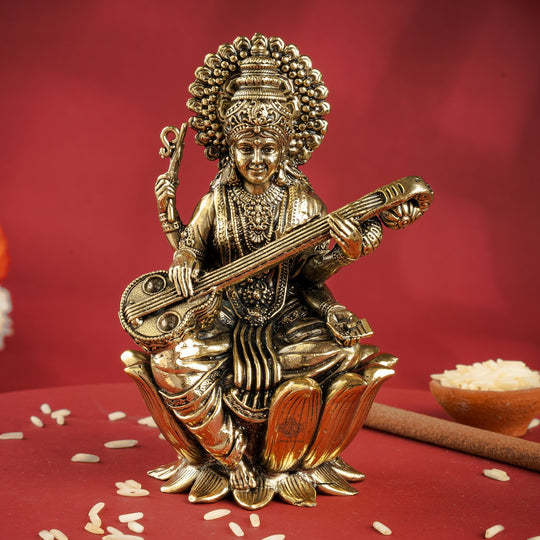
Here's the thing most people don't realise: a real manufacturer isn't just someone selling you a finished statue. They're involved at every step — alloying the brass themselves, casting the murti, hand-chiselling the facial features and jewellery detailing, buffing the surface smooth, and finally sealing it with a protective coating. When a manufacturer owns that whole process, they can actually guarantee things like metal purity, consistent weight, and sharper detailing. Compare that to a reseller who's sourcing from five different small workshops — they simply can't vouch for quality at every stage, because they weren't there for most of it.
This matters more than it might seem, especially since a murti isn't a decorative piece you look at once and forget — it's something used for daily worship. A cheaply cast one, made from low-grade or mixed brass, can start looking patchy or dull within a few months. So if you're comparing options, don't just look at the price tag. Ask how the piece was actually cast and finished.
Why Does Everyone Use Brass for Murtis, Anyway?
Brass — an alloy of copper and zinc — has basically been the go-to metal for Indian religious idols for centuries, and it's not hard to see why once you look at the reasons:
● It doesn't rust. Even decades of handling, cleaning, and aarti smoke won't damage it structurally.
● There's a ritual angle too — brass bells and idols give off that resonant tone many associate with purity during puja.
● It's soft enough for artisans to carve fine detail into, but strong enough to hold that detail for years.
● And with a bit of regular cleaning, it develops a warm golden lustre — the look a lot of families consider auspicious for a home temple.
Handcrafted or Machine-Cast? It Actually Makes a Difference
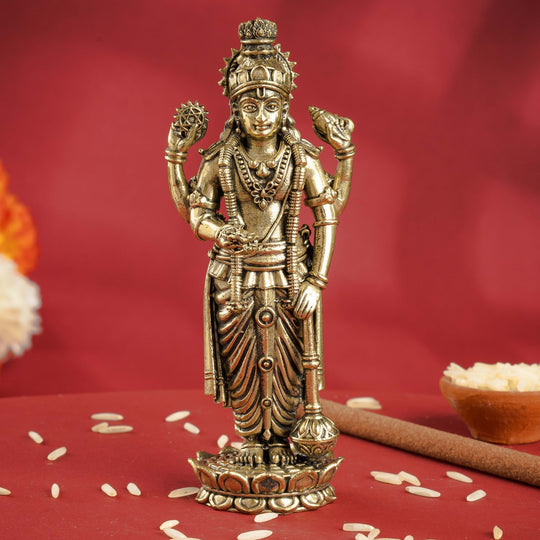
There are two main ways murtis get made. Lost-wax casting — sometimes called cire perdue — is the traditional route: each piece starts life as a wax model, gets coated in clay, gets fired so the wax melts away, and is then filled with molten brass. It's slower, but it's why hand-finished murtis made this way are never perfectly identical to one another — and it's the method behind the fine detailing you see on temple-grade idols. Sand casting, on the other hand, is quicker and cheaper, and works fine for simpler designs produced in bulk, but you'll generally notice it's less detailed.
A manufacturer worth buying from will just tell you upfront which method was used for a given piece — because honestly, it changes both the price and how much detail you should expect to see.
A Few Things Worth Checking Before You Buy
If you're trying to tell a serious manufacturer apart from someone just reselling stock, here's what to ask:
● Is it solid brass, or is it plated over a cheaper base metal? Solid pieces are noticeably heavier and keep their finish much longer.
● What's the finish — antique, dual-tone, gold-polished — and is it food-safe and lead-free? Worth confirming if it's going into daily puja use.
● For larger statues, ask if they'll photograph and ship you the exact piece, since hand-finished murtis do vary slightly from one to the next.
● Ordering in bulk? Get clarity on minimum order quantities, breakage-proof packaging, and export paperwork if you're shipping internationally.
Where Indian Art Villa Fits In
Indian Art Villa manufactures brass murtis with artisans hand-finishing each statue after casting — bringing out the facial expressions, jewellery detailing, and drapery folds that separate a good piece from a great one. The range covers all the popular names — Ganesha, Lakshmi, Saraswati, Krishna, Shiva, Hanuman, Buddha — in sizes that work for both a home temple and larger gifting or export orders. Every piece goes through a metal-consistency and finish check before it's packed, and yes, the brand ships both individual retail orders and wholesale/B2B brass murti orders, domestically and internationally.
Keeping Your Brass Murti Looking Its Best
● Give it a wipe with a soft, dry cloth after use — especially after aarti with diyas or incense, since moisture spots can build up.
● Every so often, clean it with a lemon-and-salt mix or a dedicated brass cleaner, then rinse and dry it properly.
● Skip the harsh chemical cleaners — they can strip away an antique or dual-tone finish fast.
● If it's not on permanent display, store it somewhere dry to slow down natural tarnishing.
Frequently Asked Questions
What's actually the best metal for a murti — brass, copper, or panchdhatu?
Brass tends to win out for most people because it strikes a good balance — durable, easy to carve fine detail into, and reasonably priced. Copper looks lovely but dents more easily. Panchdhatu, a five-metal alloy, is more of a traditional choice for larger temple idols, and it's pricier because it includes silver and gold content.
How do I actually tell if a murti is solid brass or just plated?
Pick it up — solid brass feels noticeably heavier for its size than a plated piece. If you scratch a solid brass murti, you'll see the same golden brass color underneath; a plated one will often reveal a different base metal. Any manufacturer worth trusting will just tell you this directly in the product description anyway.
Do I need to do any special puja before using a new brass murti?
A lot of households do a simple purification ritual first — washing the murti with Gangajal or milk, for example — but this really comes down to personal or regional tradition rather than anything the manufacturer requires.
Does Indian Art Villa do wholesale brass murti orders?
Yes — Indian Art Villa supplies brass murtis both at retail level, for individual home temples, and at wholesale volumes for retailers, gifting businesses, and export buyers, with packaging built to protect the detailed castings in transit.
Realistically, how long does a brass murti last?
With just light, regular cleaning, a solid brass murti can stay in daily use for decades without any structural issues — brass simply doesn't rust. You might want to re-polish the surface every so often depending on handling and how much smoke or humidity it's exposed to, but that's about it.
