


Have you ever paused in the middle of a meal and wondered if the plate beneath your food is as important as the food itself? Most of us focus on the flavors, the ingredients, or the calories—but rarely do we think about what we're eating from. Surprisingly, the material of your plate may matter more than you realize. For generations, Indian households have preferred metal plates over ceramic or plastic, not simply because of tradition, but because they believed these utensils offered real health and wellness benefits. As it turns out, that age-old wisdom has more meaning than many of us ever imagined.
If you've been searching for which plate is good for health to eat, you're already asking the right question. Let's walk through it properly.
Why Your Plate Actually Matters
Here's something a lot of people don't realise: the surface your food touches can interact with it, especially when it's hot, oily, or acidic. Plastic plates, for instance, can leach microplastics and chemicals like BPA when they come into contact with hot food. Cheap ceramic plates with glazed patterns sometimes carry lead in the glaze. Even some modern steel alloys are mixed with materials that aren't ideal for daily, long-term use.
Metal plates made from pure, traditional metals work differently. They don't absorb food, they don't react the same way plastics do, and many of them come with properties that actually support digestion and nutrient intake. This is exactly why brass and bronze plates have made such a strong comeback in Indian kitchens — they were never really "old-fashioned," they were just temporarily overshadowed by cheaper, mass-produced alternatives.
The Case For Brass Plates
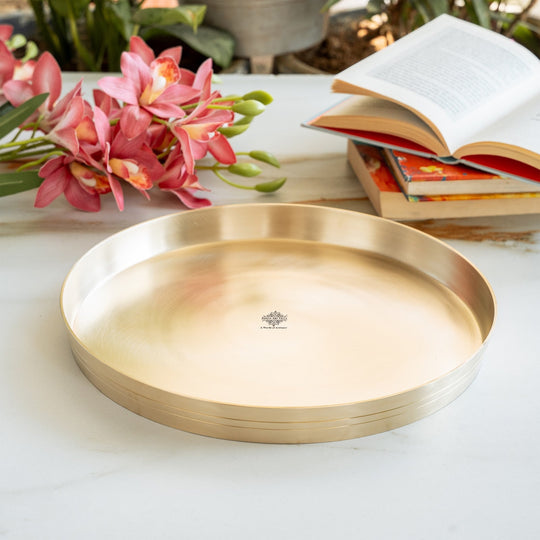
Brass, or "peetal" as it's commonly known, is an alloy of copper and zinc. When you eat off a brass plate regularly, here's what tends to happen:
Better digestion. Brass is known to stimulate the digestive fire, what Ayurveda calls "agni." Many people who switch to brass thalis report feeling less bloated and more comfortable after meals.
Natural mineral boost. Because brass contains copper and zinc, small trace amounts can transfer to food, especially warm or slightly moist dishes. Both copper and zinc play a role in immunity and metabolic health.
Antibacterial properties. Brass has natural antimicrobial characteristics, meaning it doesn't harbour bacteria the way plastic surfaces can, particularly in scratches and grooves that build up over time on plastic dinnerware.
Built to last generations. Unlike plastic or low-grade steel that wears down, chips, or gets tossed within a few years, a well-maintained brass plate can genuinely be passed down as a family heirloom.
For everyday meals — rotis, sabzi, dal, rice — brass plates are considered one of the safest and most beneficial choices you can make for your dining table.
What About Bronze Plates?
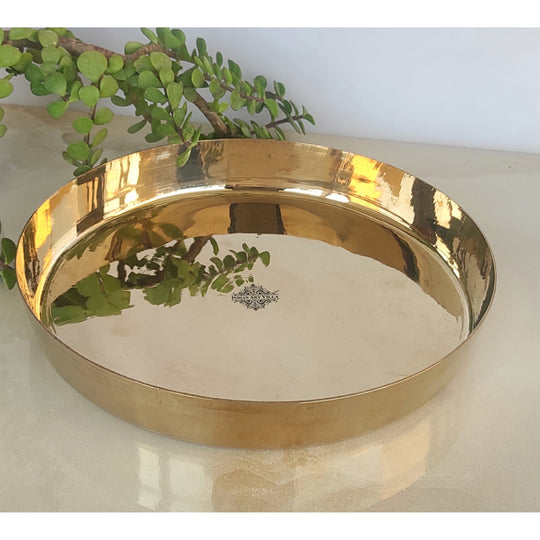
Bronze, called "kansa" in India, is an alloy primarily of copper and tin. Kansa plates have a particularly strong reputation in Ayurvedic tradition, and for good reason.
Alkalising effect. Kansa is believed to neutralise the acidity in food, which is why it's traditionally recommended for people dealing with acidity or digestive discomfort.
Supports eye health. Ayurvedic texts associate kansa utensils with benefits for eyesight when used consistently over time.
Rich, weighted feel. There's also something to be said for the simple experience of eating from a well-crafted bronze thali — the weight, the shine, the tactile pleasure of using a well-made object instead of disposable dinnerware.
That said, bronze does need a little more care than brass. Because of its tin content, kansa plates are traditionally used for foods that aren't heavily acidic or those that are eaten fairly soon after being served, rather than for storing acidic dishes like pickles or citrus-heavy preparations for long periods. With normal daily meals and proper washing after use, this isn't a concern at all — it's really only relevant for prolonged storage of acidic food.
Can We Eat In Bronze Plate Daily?
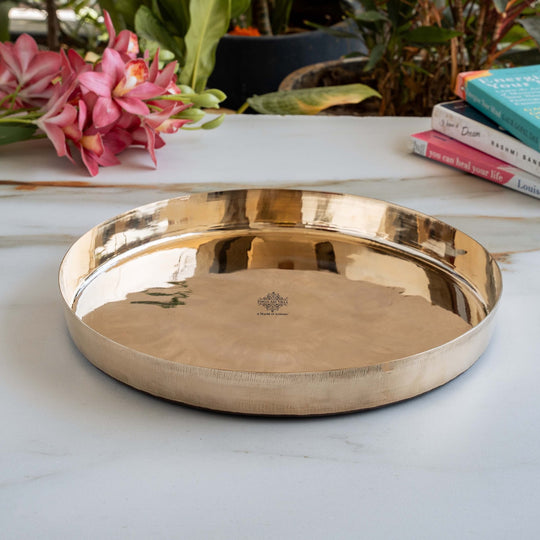
Yes, absolutely — bronze (kansa) plates are traditionally used for daily meals across many Indian households, especially in Bengal, Odisha, and parts of South India. Daily use is actually how kansa is meant to be enjoyed, since the benefits build up with consistency rather than occasional use. The one habit worth avoiding is letting very acidic or sour food (think raw mango pickle or tamarind-heavy dishes) sit on the plate for hours before eating, simply because prolonged contact with strong acids and tin isn't ideal. For regular meals eaten within a normal timeframe, daily use is completely fine and, by tradition, encouraged.
Comparing Your Options
|
Plate Type |
Best For |
Watch Out For |
|
Brass |
Daily meals, all food types |
Needs occasional polishing |
|
Bronze (Kansa) |
Daily meals, digestion support |
Avoid long storage of very acidic food |
|
Stainless Steel |
Practical, low-maintenance use |
Doesn't offer the same mineral benefits |
|
Ceramic |
Occasional/formal dining |
Some glazes contain lead |
|
Plastic |
Best avoided |
Leaches chemicals with hot food |
Making The Switch
If you're used to steel or ceramic, moving to brass or bronze doesn't have to be an all-or-nothing decision. A lot of families start with one or two plates for daily use and slowly build up their collection as they see how it fits into their routine. A little care goes a long way too — a light hand wash after each meal, an occasional polish with tamarind or a natural cleaner, and storing plates in a dry space keeps them looking beautiful and performing well for years.
At the end of the day, the "best" plate for health is one that's genuinely good for your body, kind to the environment, and built to last rather than end up in a landfill within a year. Traditional handcrafted brass and bronze plates check every one of those boxes, which is exactly why they've stood the test of time in Indian homes for centuries.
Frequently Asked Questions
Which plates are healthy for eating?
Brass and bronze (kansa) plates are considered among the healthiest options for eating, thanks to their natural antimicrobial properties, mineral content, and long tradition of supporting digestion. Stainless steel is a safe, low-maintenance alternative, while plastic and lead-glazed ceramic plates are best avoided for daily use.
Which plate is best for health?
Bronze (kansa) plates are often considered the best overall for health because of their alkalising effect on food and their long-standing use in Ayurveda for supporting digestion and eye health. Brass plates are a close second, offering similar antimicrobial and mineral benefits with slightly easier day-to-day maintenance.
Can we eat on a bronze plate daily?
Yes, bronze (kansa) plates are traditionally used for everyday meals in many Indian households. Daily use is recommended for the benefits to build up over time. The only thing to avoid is leaving very acidic foods sitting on the plate for extended periods; normal meals eaten within a typical timeframe are completely safe.
Which plates are safe to eat?
Pure, well-crafted brass and bronze plates from a trusted manufacturer are safe for eating, as are food-grade stainless steel plates. Avoid plastic plates for hot food, and be cautious with ceramic plates that have brightly coloured or old glazes, as these can sometimes contain lead.
