


We spend a lot of time thinking about what we eat. But have you ever thought about what we eat it on?
Your plate, bowl and glass touch your food every single day, often with hot dal, tangy sabzi or steaming rice. So the material of your dinner set matters more than most of us realise. Let's go through the common options in simple language, and help you pick the best dinnerware set for health and for everyday Indian meals.
Why Does Dinnerware Material Matter?
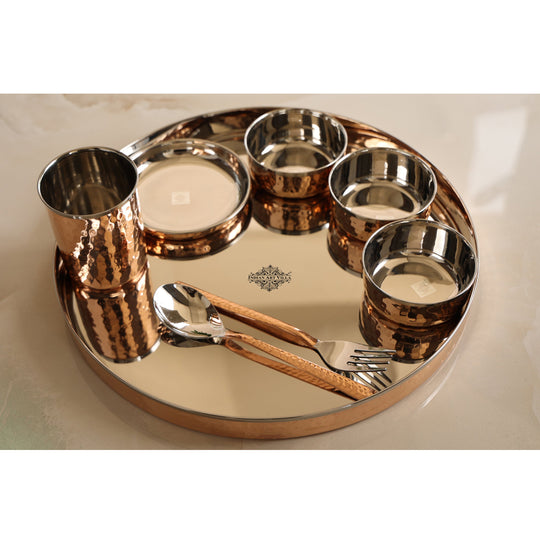
Indian food is hot, spicy, oily and often acidic (think tomato gravies, lemon rice, curd-based dishes). Heat and acid can make some materials react with food, or release unwanted chemicals into it. A good health-friendly dinner set should be:
-
Non-toxic, with no harmful chemicals leaching into hot food
-
Non-reactive with Indian cooking styles
-
Durable, without peeling, chipping or cracking
-
Easy to clean and hygienic
Keep these four points in mind as we compare the options.
Dinnerware Materials Compared
1. Stainless Steel
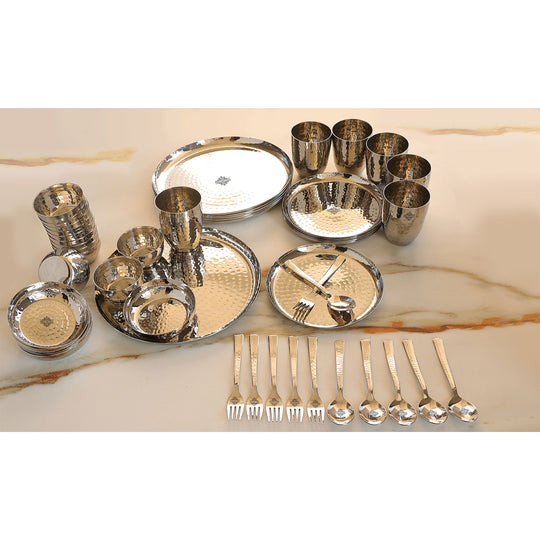
Steel is a practical and affordable everyday option commonly found in Indian homes. It is strong, durable, easy to clean, and suitable for regular use, though its simple appearance may feel less elegant for special occasions.
2. Glass
Plain, good-quality glass (like borosilicate) is non-porous and doesn't absorb flavours or smells. It is a healthy choice, but it can break easily and may not suit a busy family with kids.
3. Ceramic and Bone China
Ceramic crockery looks lovely and is mostly safe, if it is made with lead-free glaze. Cheap, brightly painted ceramic can contain lead or cadmium in the colour or glaze, so buy only from trusted makers.
4. Melamine and Plastic
These are light and unbreakable, which is why many people love them. But melamine is not meant for very hot food, and plastic can release chemicals when heated. Avoid using them for hot dal, soup or microwaving.
5. Brass (Pital)
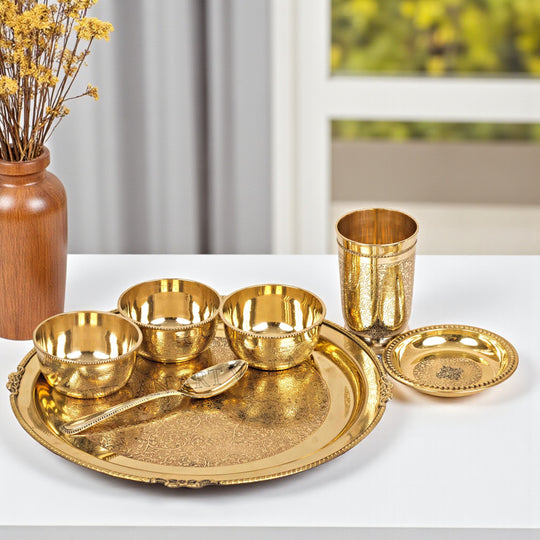
Brass is an alloy of copper and zinc and has been used in Indian kitchens for generations. Brass thalis, bowls and glasses are strong, long-lasting and don't peel or chip like coated crockery. According to Ayurveda, eating from brass is considered good for digestion and overall balance, and brass is traditionally linked with warmth and nourishment.
6. Copper
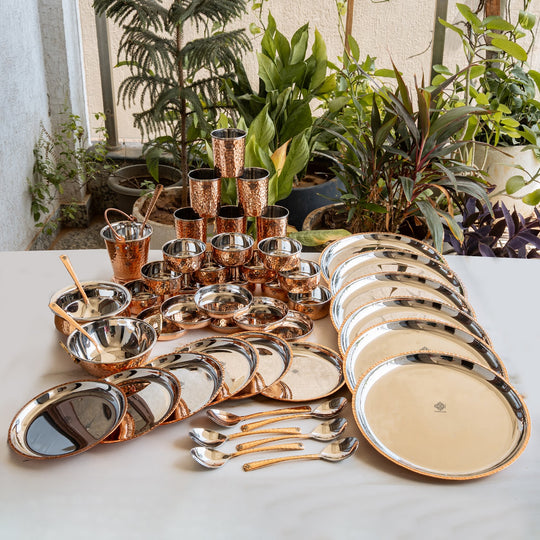
Copper has a special place in Ayurveda. According to Ayurveda, water stored in a copper vessel (tamba jal) supports digestion and the body's natural balance. This is why copper glasses, bottles, jugs and bowls are loved by health-conscious families. Copper is a great choice for drinkware and serveware.
The Indian Art Villa Choice: Brass and Copper Dinnerware
If you want dinnerware that is healthy, beautiful and made to last for decades, this is where Indian Art Villa (IAV) comes in.
Indian Art Villa is a direct manufacturer of handcrafted copper, brass, bronze and silver-plated products, founded in 2012. With 2,500+ products and over 25,000 happy customer reviews, IAV has become a trusted name for people who want to bring traditional metal utensils back to their dining tables.
Here is why many Indian families choose IAV brass and copper dinnerware:
-
Handcrafted quality: Every brass thali, bowl and glass is made with skilled craftsmanship, so you get a sturdy piece, not a flimsy one.
-
Brass dinner sets for everyday and festive use: From simple thali sets to full brass dinner sets with katoris, glasses and spoons, there is a design for daily meals and for special occasions.
-
Copper glasses, jugs and bottles: Perfect for storing and drinking water the traditional way, which Ayurveda recommends.
-
Long-lasting and eco-friendly: Metal dinnerware does not need replacing every year like cheap crockery. One good set can serve your family for generations.
-
Beautiful on the table: The warm golden glow of brass and the rich tone of copper make every meal feel special, and they make wonderful gifts for weddings and housewarmings.
If you are building a healthier kitchen, a brass thali set for meals and a copper glass or jug for water is a lovely combination.
Simple Care Tips for Brass and Copper
Metal dinnerware is easy to look after once you know the basics:
-
Wash with mild soap and a soft cloth after use.
-
Dry well to avoid water spots.
-
Polish occasionally with a lemon and salt or tamarind paste to bring back the shine.
-
Do not use in the microwave.
-
For very sour or acidic foods, eat from them soon after serving rather than storing food for long hours in these utensils.
What to Avoid When Buying Dinnerware
-
Unbranded, brightly painted crockery with no information on the glaze or paint
-
Low-quality melamine or plastic for hot meals
-
Chipped, cracked or scratched plates, where food and germs can get stuck
-
Very cheap coated or non-stick-style plates that can peel with time
-
Sellers who can't tell you what the material is or how it is made
Always buy from a seller who clearly mentions the material, and prefer makers with real customer reviews.
So, Which Dinner Set Should You Choose?
There is no single "perfect" material, but here is a simple way to decide:
-
For everyday durability and tradition, go for brass.
-
For water and drinkware, choose copper.
-
For light, budget-friendly use, stainless steel or good glass works well.
For Indian families who want a healthy, long-lasting and beautiful dinner set, brass and copper from Indian Art Villa are a smart, time-tested choice.
Frequently Asked Questions (FAQs)
Q. What is the healthiest material for dinnerware?
A. Brass and copper are widely considered good choices. Steel and glass are non-reactive and easy to clean, while brass and copper are valued in Ayurveda for supporting digestion and balance. Avoid low-quality plastic and melamine for hot food.
Q. Which material is good for dinnerware sets?
A. It depends on how you use it. Stainless steel is great for daily use, glass is clean and non-porous, ceramic looks elegant, and brass dinner sets are strong, long-lasting and traditional. Copper is ideal for water glasses, jugs and bottles. For Indian homes, a mix of brass and copper pieces works beautifully.
Q. Which crockery is best for health?
A. Crockery that is free from lead and harmful chemicals is best for health. Look for lead-free ceramic, good-quality brass and copper. Many people also choose brass thalis and copper drinkware from trusted makers like Indian Art Villa, because they are made from natural metals and don't peel or release plastic chemicals.
Q. What to avoid when buying dinnerware?
A. Avoid cheap, unbranded painted crockery, low-quality plastic or melamine for hot food, plates with cracks or chips, and any item where the seller cannot tell you the material or glaze. Always check reviews and buy from a reliable manufacturer.
Looking to upgrade your dining table? Explore the handcrafted brass and copper collection at Indian Art Villa and bring home dinnerware made to last.
