


Navratri is close, and that means one thing in most Indian homes: the pooja room gets its yearly glow-up.
Diyas get washed, the mandir is dusted, fresh flowers arrive, and somewhere in the middle of it all, someone in the family says, "Why don't we bring a new murti this time?"
If that someone is you, you're in the right place. Let's talk about brass God idols for the pooja room: why families have chosen them for generations, how to pick the right one, and how to make sure it looks beautiful long after the nine nights are over.
Why Brass? Why Not Just Any Idol?
Walk into an old family home or a temple, and you'll almost always find brass. That's not a coincidence.
It lasts. A brass murti doesn't chip, crack, or fade the way many idols do. With basic care, it can be passed down from one generation to the next. Many of us have seen a brass Ganesh ji that has sat in the same mandir since our grandparents' time.
It's traditional. Brass has been used in Indian worship for centuries, in diyas, bells, aartis, kalash, and murtis. Bringing home a brass idol feels connected to that tradition.
It glows. Under the soft light of a diya, brass has a warm, golden shine that makes the whole pooja corner feel peaceful. Nothing else quite matches it.
It's meant to be handled. Abhishek, offering flowers, applying tilak, cleaning after pooja: brass takes all of it without a fuss.
It's considered pure. In Indian tradition, brass has long been seen as a pure and auspicious metal for worship. That's why it's so common in pooja thalis, kalash, and temple utensils, and why many families feel it's the right choice for a murti that will be offered abhishek, bhog, and prayers every day.
It feels personal. A brass murti isn't just decor. It becomes part of your family's memories: the first pooja in a new home, the Navratri mornings, the aarti your children grow up hearing. Years later, that same idol carries all those moments with it.
Which Brass Idol Is Right for Your Pooja Room?
This is the question we hear most. Since it's Navratri, let's start with the Goddess.
Maa Durga: The Heart of Navratri
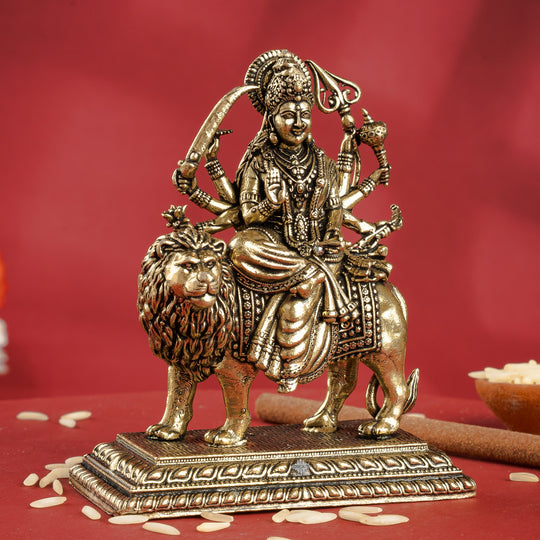
If you're thinking of one idol for these nine days, Maa Durga is the natural choice. A brass Durga murti, whether seated on her lion or standing with her many arms raised, brings a sense of strength and protection to the home. Many families install the idol on the first day and keep it in the mandir well beyond Navratri.
Maa Lakshmi: For Prosperity and Blessings

Lakshmi ji is worshipped for wealth, abundance, and good fortune, so she's a lovely addition to your pooja room, especially with Diwali not far behind. A brass Lakshmi on a lotus, with gold coins pouring from her hand, is a classic that never goes out of style.
Maa Saraswati: For Learning and Wisdom
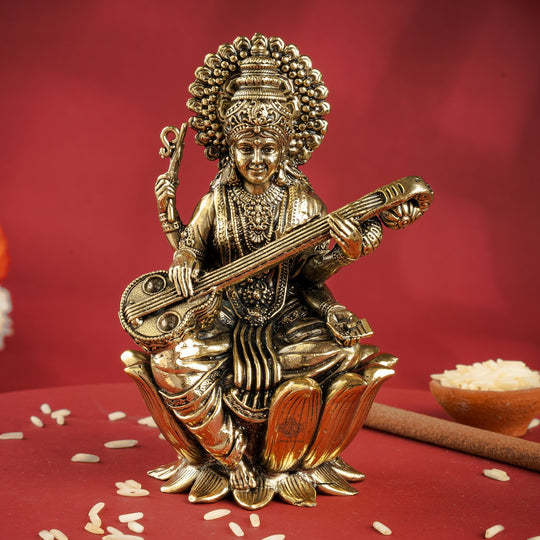
Have children studying for exams, or someone learning music or art? A brass Saraswati idol is a thoughtful choice. It's also a beautiful gift for a student.
Lord Ganesha: The Beginning of Every Pooja
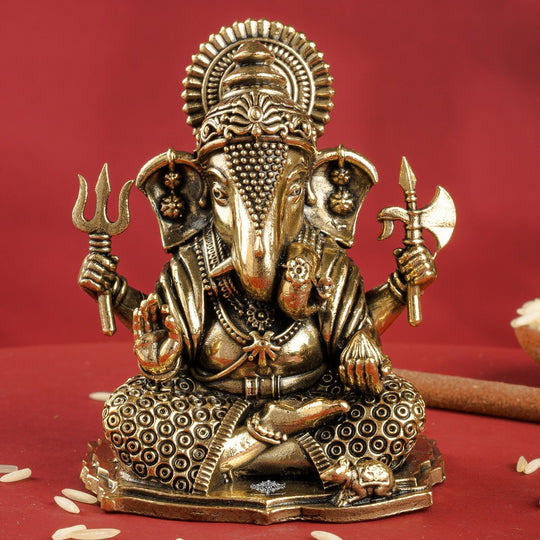
No pooja starts without Ganesh ji, so if your mandir doesn't have a brass Ganesha yet, this might be the moment. He's also the most popular gifting option for housewarmings and weddings.
Other Favourites for the Pooja Room
-
Laddu Gopal / Krishna: For families who do daily seva, dressing and feeding the little Kanha.
-
Hanuman ji: Popular for courage and devotion.
-
Shiv Parivar: Shiva, Parvati, Ganesha, and Kartikeya together in one composition.
-
Radha Krishna: A favourite for its grace and beauty.
How to Choose the Right Size
Bigger isn't always better. Here's a simple way to think about it.
Measure your mandir first. Look at the shelf or platform where the idol will sit. Leave enough room around it for flowers, diyas, and offerings. A crowded mandir loses its calm.
Match the size to how you worship.
-
Small idols (3 to 6 inches) suit wall-mounted mandirs, compact flats, and travel or car use.
-
Medium idols (6 to 12 inches) are the most popular size, perfect for a standard home pooja room.
-
Large idols (12 inches and above) suit a dedicated pooja space, a large mandir, or an entrance or living area.
Think about weight. A solid brass idol has a good, steady weight and stays stable on the platform. That's a good sign.
What to Look for Before You Buy
A murti is something you'll see every single day, so it's worth choosing carefully.
-
Facial expression. The face should look calm and graceful. If it looks right to you, it's right.
-
Fine detailing. Look at the jewellery, the clothing folds, the hands and the eyes. Careful detailing shows careful craftsmanship.
-
Finish. Brass idols come in a bright golden polish, an antique finish, and other styles. Pick what suits your mandir's look.
-
Stable base. The idol should stand firmly without wobbling.
-
Honest description. Check the size, weight, and material details before you order.
A Few Navratri Pooja Room Tips
Since these nine days are special, here are some small things that make a big difference.
-
Clean the mandir before Day 1. A fresh, tidy space sets the mood.
-
Place the idol in the right direction. Many families follow the tradition of keeping the pooja room in the north-east of the home, with the idol facing east or north. If you follow Vastu, this is a good thing to keep in mind. Traditions vary from family to family, so go with what you follow at home.
-
Keep the idol elevated. Place it on a clean platform, a wooden chowki, or a cloth, and never directly on the floor.
-
Use natural elements. Fresh flowers, ghee diyas, and incense make the space feel alive.
-
Light the diya every day. That warm glow against the brass is the most beautiful sight of Navratri.
How to Clean and Care for Your Brass Idol
Good news: brass is easy to maintain.
For regular cleaning: Wipe gently with a soft, dry cotton cloth after pooja to remove flowers, oil, or kumkum.
For a deeper clean (once a month or before festivals):
-
Make a paste with a little lemon juice and baking soda, or use a mild tamarind soak.
-
Apply gently with a soft cloth or a very soft brush.
-
Rinse with clean water.
-
Dry thoroughly and buff with a soft cloth.
Do's
-
Dry the idol fully after washing.
-
Keep it away from damp corners.
Don'ts
-
Avoid harsh chemicals or hard scrubbers.
-
Don't use steel wool, which can scratch the surface.
Brass naturally darkens a little over time. Some people love that antique look, and others prefer the shine, so polish it as you like.
Why Buy Your Brass Idol from Indian Art Villa?
At Indian Art Villa, we understand that a murti is not just a product. It's something that will sit in your home, hear your prayers, and become part of your family's story.
That's why our collection of brass God idols is chosen with care, from Maa Durga and Lakshmi to Ganesha, Krishna, and Hanuman, in sizes and finishes to suit every pooja room, from a small flat to a large family mandir.
Whether you're setting up your first mandir, refreshing an old one, or looking for a meaningful Navratri gift, you'll find something that feels right.
👉 [Explore our Brass God Idols collection] and bring home a murti that will glow in your pooja room this Navratri and for many festivals to come.
Final Thoughts
Navratri is about welcoming the Divine into your home, and the idol you choose is a beautiful way to do it. Pick one that feels right, place it with love, and let those nine nights fill your home with peace.
Wishing you and your family a blessed and joyful Navratri. 🙏
Frequently Asked Questions
1. Which brass idol is best for the pooja room?
Ganesha, Lakshmi, Durga, Krishna, and Hanuman are among the most popular choices. If you're buying for Navratri, Maa Durga is a natural pick, and many families also choose Lakshmi or Saraswati.
2. Is it good to keep a brass idol at home?
Yes. Brass has been used in Indian worship for centuries and is valued for its durability and traditional look. It's a long-lasting choice for a home mandir.
3. What size brass idol should I keep in my home mandir?
For most home pooja rooms, 6 to 12 inches works well. Choose a smaller idol for a compact or wall-mounted mandir, and a larger one if you have a dedicated pooja space.
4. Can I buy a new idol during Navratri?
Many families like to bring home a new murti during Navratri as it's considered an auspicious time. For specific rituals, it's best to follow your family's tradition or consult your pandit.
5. How do I clean a brass God idol at home?
Wipe it with a soft cloth regularly. For a deeper clean, use a gentle paste of lemon juice and baking soda or a mild tamarind soak, rinse well, and dry thoroughly. Avoid harsh chemicals and abrasive scrubbers.
6. Will a brass idol lose its shine?
Brass naturally darkens over time. You can polish it to restore the golden shine, or leave it for a lovely antique look.
7. Can brass idols be gifted?
Absolutely. Brass idols are a popular choice for housewarmings, weddings, Navratri, and Diwali, as they're meaningful and long-lasting.
8. Which direction should a God idol face in the pooja room?
According to common Vastu tradition, idols are placed facing east or north, with the pooja room in the north-east of the home. Practices differ across families, so follow what your household observes.
